How Dental Implants in Calabasas CA Help Preserve Facial Structure
Most people first think about dental implants in terms of chewing, speaking, or filling a visible gap in the smile. Those benefits matter, of course. But one of the most important reasons dentists recommend implants has less to do with the teeth you see and more to do with the face that surrounds them. Tooth loss changes the jawbone, the soft tissue, and the way the lower face is supported. Over time, that shift can make someone look older, more drawn, or subtly collapsed around the mouth.
That process does not happen overnight. It usually unfolds gradually, which is part of what makes it easy to underestimate. A patient may lose a molar in Dental Implants Calabasas CA the back and think, reasonably, that no one can see it, so there is no rush. Months later, function feels manageable. A year or two later, the missing tooth space has begun to affect the bite, the underlying bone has started to shrink, and the cheek or lower face may not sit quite the same way it once did. By then, restoring the Dental Implants Calabasas CA area is still possible in many cases, but the treatment may be more involved than it would have been earlier.
For patients exploring Dental Implants Calabasas CA, the conversation often starts with aesthetics and ends with anatomy. Implants do far more than replace a tooth crown. They help maintain the bone that supports the face, and that support is a major part of how a person keeps natural contours over time.
Why facial structure changes after tooth loss
A natural tooth does more than occupy space. Its root sits in the jawbone and transmits pressure into that bone when you chew. That mechanical stimulation is not a minor detail. Bone is living tissue, and it responds to use. When a tooth is removed, the body no longer receives the same signal in that area. As a result, the bone that once held the root begins to resorb, meaning it slowly shrinks.
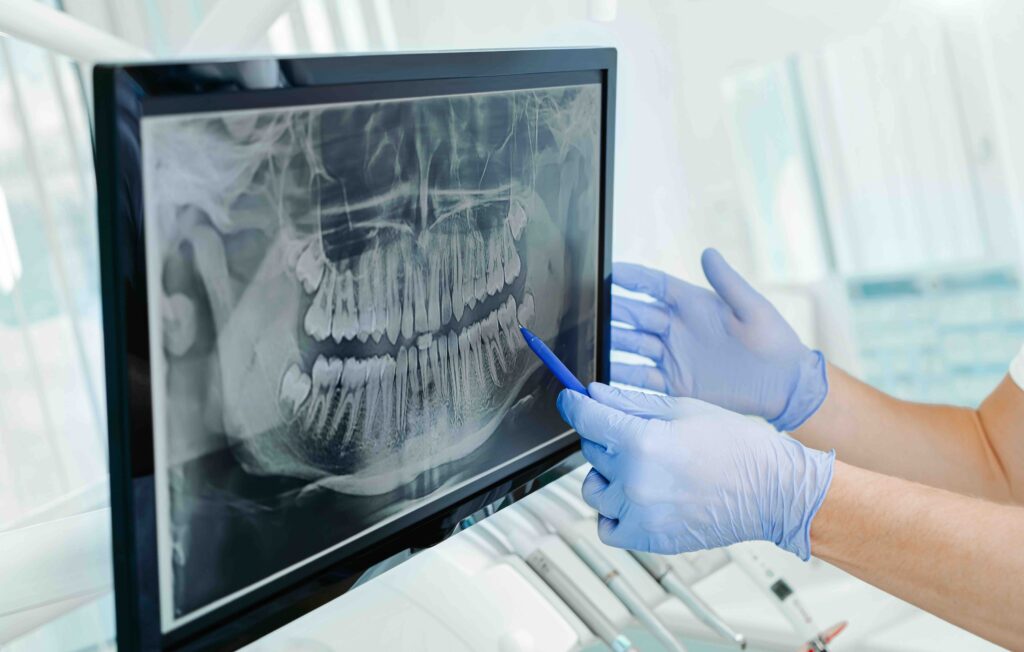
This is not just a technical issue seen on an X-ray. Bone loss changes the dimensions of the jaw. The ridge where the tooth once sat can become narrower and shorter. If enough teeth are missing, especially in the back, the lower third of the face can lose some of its structural support. Lips may appear thinner or less supported. The corners of the mouth can begin to turn downward. Wrinkles around the mouth may look deeper, not because the skin suddenly changed, but because the framework beneath it did.
I have seen patients surprised by this. They expected a gap in the smile, perhaps some trouble chewing steak or nuts, but not a facial change. Yet when older family photos are compared with the current profile, the difference often becomes clear. The face has not simply aged in a generic sense. It has adapted to the loss of bone and support.
The degree of change varies. Losing one tooth does not create the same effect as losing many. Genetics, bite forces, age, smoking status, gum disease history, and general health all play a role. Still, the pattern is well understood in clinical practice. Missing teeth tend to lead to bone loss, and bone loss tends to affect facial contours.
What makes implants different from bridges and dentures
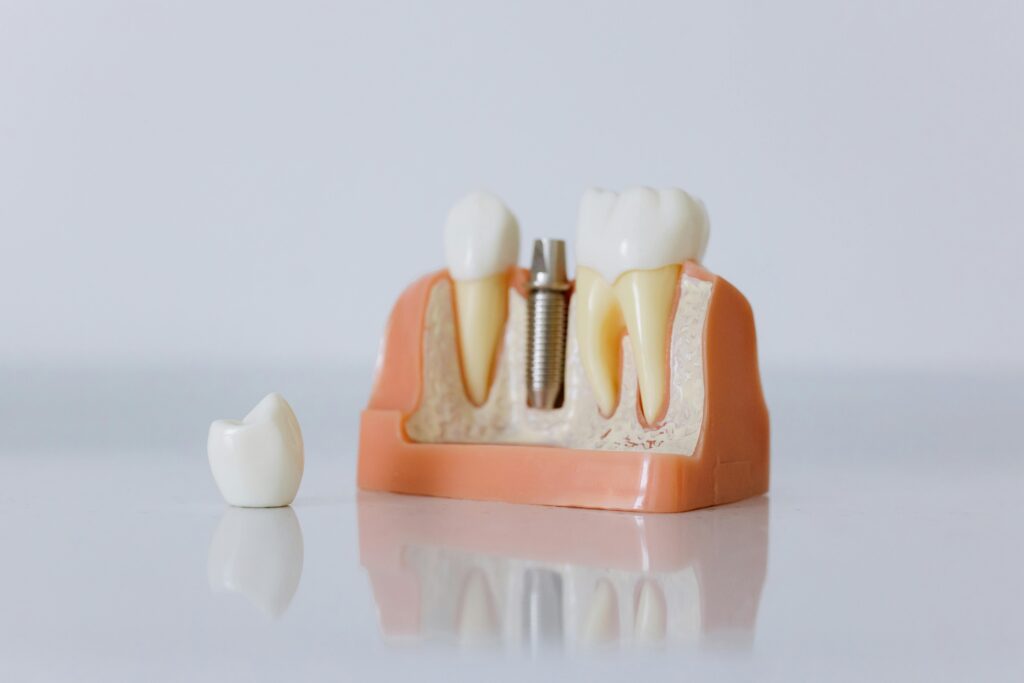
A conventional bridge replaces the visible part of a missing tooth by anchoring to neighboring teeth. It can be an excellent option in the right case, especially when adjacent teeth already need crowns. But a bridge does not replace the root. The same is true for a traditional removable denture. It may restore appearance and some function, but it rests on the gums rather than integrating with the jawbone like a natural tooth root.
A dental implant is different because it is placed in the bone. Once healed, it functions as an artificial root. That is the key feature when the discussion turns to facial structure. Because the implant transfers chewing force into the jaw, it helps preserve bone in a way that other tooth replacement options generally do not.
This does not mean implants stop every possible change in the face. They are not a guarantee against aging, and they cannot completely undo years of previous bone loss without additional procedures in some cases. But they offer something uniquely valuable: they help maintain the architecture that supports the soft tissues of the lower face.
That distinction matters in everyday terms. A person with an implant in a strategic area often keeps a more stable ridge contour, better support for the surrounding gum tissue, and a more natural relationship between the teeth, lips, and cheeks. Those details may seem small individually, but together they shape how the face reads.
The jawbone is the quiet foundation of the lower face
When people think about facial appearance, they usually focus on skin, volume, and symmetry. In dentistry, the bone beneath those features often tells the deeper story. The upper and lower jaws support the teeth, the lips, and the cheeks. They also help determine how the mouth sits at rest and how the face moves during speech and expression.
Loss of bone in the posterior, or back, regions can reduce vertical support and chewing efficiency. Loss in the anterior, or front, region can affect lip support and smile dynamics. If several lower teeth are missing, the lower jaw may look more pronounced simply because the upper support has diminished. If upper front teeth have been absent for a long time, the area beneath the nose and upper lip can flatten.
Patients sometimes describe this as looking tired or older, even when the rest of their features have changed very little. That description is often accurate. The issue is not vanity. It is structural.
Dental implants in Calabasas CA are frequently recommended with this in mind, especially for patients who want a solution that protects not just the bite but the long-term form of the face. In practices that place and restore implants regularly, the planning process usually includes close evaluation of bone width, bone height, gum thickness, smile line, lip support, and bite relationship. The goal is not merely to fill a gap. It is to preserve or rebuild normal anatomy as faithfully as possible.
Timing matters more than many patients realize
One of the hardest parts of implant treatment is helping patients understand that waiting can quietly raise the cost of restoring a missing tooth. If a tooth has just been removed, the implant conversation is often simpler. In some cases, the site can be grafted immediately or even receive an implant soon after extraction, depending on infection, bone quality, and the exact situation.
If several years pass, the bone tends to shrink. What could have been a straightforward implant may now require bone grafting, sinus elevation in the upper back jaw, or more advanced soft tissue management. None of that means the case cannot be treated. It simply means the anatomy has changed, and treatment has to respond to that reality.
Patients are often relieved to hear that bone grafting is common and predictable in experienced hands. Even so, preserving native bone is usually easier than rebuilding what has already been lost. That is one reason clinicians encourage timely evaluation after tooth loss, even if treatment cannot begin immediately.
There is also a practical emotional piece to timing. People adapt to missing teeth quickly. The body is remarkably good at compensating. You chew on the other side. You avoid certain foods. You stop smiling as widely. Because the adaptation feels manageable, the need for treatment can seem less urgent. Meanwhile, the bone continues changing in the background.
How implants support the soft tissues of the face
Bone preservation is the headline benefit, but soft tissue support deserves equal attention. The gums, lips, and cheeks drape over the underlying structures. If those structures shrink, the tissue loses support. This can alter the fullness around the mouth and affect the way the lips come together.
An implant restoration, when properly designed, helps maintain the emergence profile, which is the way the tooth appears to rise naturally from the gumline. That shape matters aesthetically, especially in the front of the mouth. A well-planned implant crown can support the surrounding gum architecture in a way that looks balanced and natural.
In full-arch cases, support becomes even more significant. Patients who have worn dentures for years often experience progressive ridge resorption. As the ridge shrinks, the denture fit worsens, facial support changes, and the lower face can appear collapsed. Implant-supported solutions can dramatically improve stability and support, though the exact design varies. Some restorations use a flange to replace lost soft tissue volume, while others are designed to mimic natural teeth and gum contours more closely. The right choice depends on how much bone and tissue remain, as well as the patient’s expectations and anatomy.
I have heard patients say they looked like themselves again after treatment, not because anyone changed their face artificially, but because support was restored where it had been fading.
One missing tooth can still matter
It is easy to assume that facial structure concerns only apply to full dentures or multiple missing teeth. That is not always true. A single missing tooth, especially in the front, can affect the neighboring tissue and the contour of the ridge. Even a back tooth can influence the way force is distributed in the bite. Over time, adjacent teeth may shift, the opposing tooth may over-erupt, and the local bone can shrink.
Not every single missing tooth causes visible facial change. That would be an overstatement. But preserving bone at the site has long-term value, particularly for younger patients who may live with the consequences for decades. A person in their thirties who loses a molar due to a cracked tooth is not just replacing a tooth for the next year or two. They are making a decision that affects the stability of that part of the jaw over the long term.
For that reason, the best implant consultations do not focus only on the immediate gap. They look ahead. How will this area function in ten years? Twenty years? What happens if another adjacent tooth needs treatment later? Preserving bone now often gives more options later.
Full-arch tooth loss and the “collapsed” look
The clearest example of facial structural change appears in patients missing most or all teeth. Without roots in the jaw, the bone resorbs progressively. The distance between the nose and chin can shorten. The lips lose support. The chin may appear closer to the nose. Fine lines around the mouth may deepen, and the jawline can look less defined.
This is often what people mean when they say someone has a “collapsed bite” or “sunken” lower face, though those terms can oversimplify a complex condition. The combination of bone loss, worn dentures, unstable occlusion, and reduced vertical dimension can dramatically change appearance.
Implant-supported treatment can help restore that lost support. Sometimes that means a fixed full-arch prosthesis anchored by several implants. In other cases, it means an implant-retained overdenture that snaps into place and improves stability while also helping preserve remaining bone. The right solution depends on bone availability, medical factors, dexterity, budget, and hygiene habits.
Here is where judgment matters. A fixed solution sounds appealing to many patients, and in the right candidate it can be life-changing. But it also demands meticulous cleaning, ongoing maintenance, and thoughtful planning. An overdenture may be a better fit for someone who wants easier home care or needs more lip support from the prosthesis design. There is no universally superior choice, only the choice that best matches the anatomy and the patient’s life.
Candidacy is not one-size-fits-all
Dental implants have a high success rate, but that does not mean every site is immediately ready for one. Good planning matters more than enthusiasm. Bone volume, gum health, diabetes control, smoking history, clenching habits, sinus anatomy, and medication history all influence treatment.
A patient with untreated periodontal disease may need that stabilized first. A patient who grinds heavily may need a night guard after the implant is restored. Someone who has worn a loose denture for many years may need grafting or a prosthetic design that compensates for lost tissue rather than pretending it was never lost.
The careful part of implant dentistry is often less visible than the final crown. It happens in the diagnostic phase, with records, scans, photographs, bite analysis, and detailed discussion. In good hands, treatment planning is where facial structure preservation begins.
A responsible consultation should also include an honest conversation about limitations. If significant bone loss has already occurred, the goal may be to improve support substantially rather than recreate every aspect of youthful anatomy. Patients usually appreciate that candor. They are not looking for a sales pitch. They want to know what is possible, what is realistic, and what will hold up.
The role of bone grafting in preserving appearance
Bone grafting sounds intimidating to many people, but in modern implant care it is often a routine tool for preserving or rebuilding the foundation needed for a stable, aesthetic result. After a tooth extraction, placing graft material in the socket can help reduce the amount of ridge collapse during healing. In sites where bone has already been lost, grafting can create a better base for implant placement.
That said, grafting is not magic. The result depends on the defect, the location, the patient’s healing capacity, and the treatment timeline. Small ridge preservation procedures are different from major vertical or horizontal augmentation. Some cases need only minor support. Others require a staged approach and patience.
From a facial structure standpoint, grafting matters because implants perform best when they are placed in a position that supports both function and appearance. If the bone is too thin or too far resorbed, the final tooth may end up compromised in contour or hygiene access. Rebuilding the site first often leads to a better long-term outcome.
This is especially important in the visible smile zone. The front teeth are unforgiving. Tiny discrepancies in gumline height, tissue thickness, or implant angle can affect appearance. In those cases, preserving or reconstructing the ridge is not a luxury. It is part of doing the job well.
What patients in Calabasas often ask
In communities where appearance and longevity both matter, the questions around implants tend to be thoughtful and practical. Patients want to know whether treatment will look natural, whether it will feel like a real tooth, how long it takes, and whether it truly prevents future changes.
The honest answer is that implants help preserve facial structure by maintaining bone, but the amount of visible benefit depends on the starting point. If a tooth was just lost and the site is treated early, preservation can be excellent. If there has been major bone loss for years, the treatment may improve support considerably, though additional procedures or prosthetic design choices may be needed to compensate for what has already changed.
Patients also ask whether age rules them out. Usually, it does not. Chronological age matters less than overall health, healing ability, and oral condition. I have seen healthy older adults do very well with implants and enjoy better function and support than they had with removable dentures.
Daily care is part of preserving the result
Implants do not decay like natural teeth, but they are not maintenance-free. The tissue around them can become inflamed, and bone can be lost if plaque control is poor or excess force goes unmanaged. Preserving facial structure does not end when the crown is delivered. It continues through good hygiene, regular professional maintenance, and protection from habits that overload the implant.
Patients who do best usually understand that implants are an investment in structure, not just appearance. They brush carefully, clean under and around restorations as instructed, keep maintenance visits, and address clenching or grinding if present. That consistency protects the bone that the implant was placed to preserve.
Looking beyond the smile
The strongest case for implants is not that they create a perfect smile photo. It is that they respect how the mouth and face actually work. Teeth are part of a system. When roots are lost, the jaw changes. When the jaw changes, the face follows. Replacing that missing root support is one of the most biologically meaningful things modern dentistry can do.
For anyone considering Dental Implants Calabasas CA, that broader perspective is worth keeping in mind. The right implant treatment can restore chewing, improve comfort, stabilize the bite, and support confidence. Just as important, it can help preserve the bone and contours that keep the lower face looking natural over time. That benefit is easy to miss at first, but in the long run it is often the one patients value most.
Oaks Dental
5000 Parkway Calabasas, Suite 308
Calabasas, CA 91302, United States
Phone: +1 (818) 412-8349
FAQ About Dental Implants Calabasas CA
How much does a dental implant cost in California?
Costs vary with the number of teeth replaced, restoration type, imaging, and any extractions or bone grafting. Request an itemized estimate after an examination; a single advertised price may not include every treatment stage.
Can people with autoimmune disease get dental implants?
Some people may qualify, but the condition, medications, oral health, and healing risks require individual assessment. Share your medical history with your dentist, who may coordinate with your treating physician.
Can you have dental implants if you have osteopenia?
Osteopenia does not by itself establish whether implants are suitable. Your dentist must evaluate jawbone support and review bone-related medications and other risks before recommending treatment.